Educating the Whole Person-4
athletics, activities, and accessibility. Of course, great Christian schools do these from a distinctively Christian perspective. This post addresses the first two of those.

athletics, activities, and accessibility. Of course, great Christian schools do these from a distinctively Christian perspective. This post addresses the first two of those.
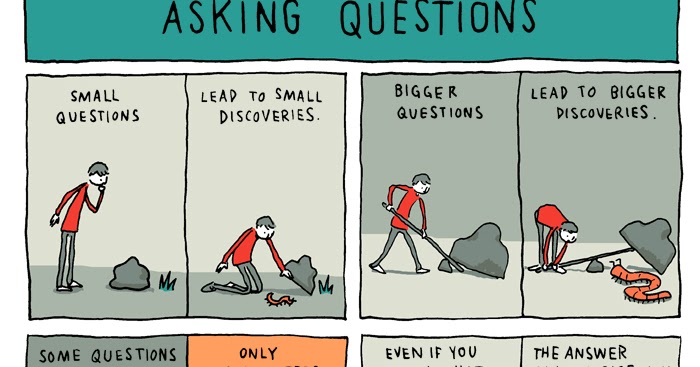
The longer I work with teams in organizations, the more I realize the power of asking the right questions. Here’s a sampling from Bob Tiede’s Great Leaders Ask Questions ebook. General questions for meeting with a client, customer, team member, or employee: 1) What is going well? 2) What’s not? 3) Where are you stuck?…
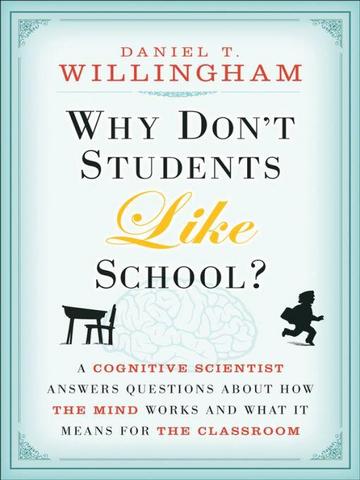
I’ve started in on Daniel Willingham’s Why Don’t Students Like School. The sub-line is more informative: “A cognitive scientist answers questions about how the mind works and what it means for the classroom.” Here are some of the more fascinating insights I’ve gained thus far. I’m sharing them largely as tidbits for reflection rather than being particularly analytical.

Forbes ran a great blog article recently on 7 reasons why millennials fail to get promoted at work. You’ve got to go read it. Seriously. Especially if you are a millennial…or you have a job. I’m not going to rehash that list here, but the 7 reasons are spot on. They got me thinking of some…

Howard Gardner is the psychologist and educator who introduced the idea of multiple intelligences. More recently, Gardner has suggested five distinct mental abilities, or minds, that are important for educators to cultivate in order for students to be effective and successful in the globalized complex world of the digital information age [1]. The first three minds are cognitive, the last two relational: The…
Higher education is facing, to paraphrase Dickens and Thomas Paine, the best and worst of times, the times that try institutions’ souls. These are the worst of times because of the great challenges facing higher education: escalating costs of tuition, facilities, books and resources, and personnel; increased competition and decreasing enrollment pools; aging adult populations;…
In the biological and social sciences, the phenomenon known as the Butterfly Effect describes how tiny small changes in the system leads to very large changes or differences in the system. There is a Butterfly Effect principle at work in nontraditional education — and especially, though not exclusively, in online courses — that relates to…
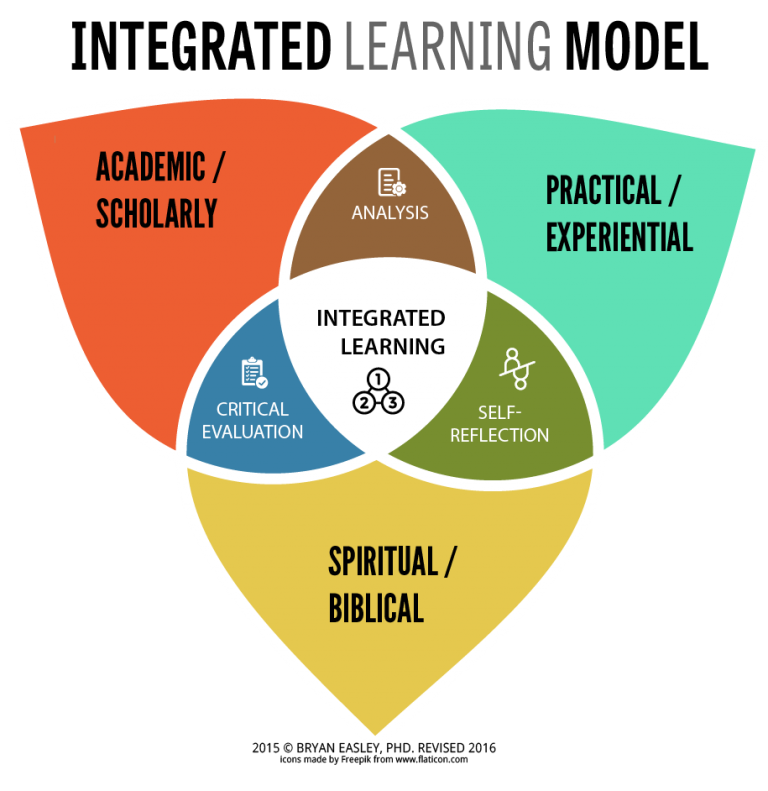
Last August, I published a simple model for helping students engage in better synthesis and integrate scholarly thought, personal experience, and biblical truth & Christian wisdom into discussion forums and academic writing. I am convinced these three domains represent distinct but crucial arenas essential for vibrant Christian higher education. The model labels these as Academic/Scholarly, Practical/Experiential, and Biblical/Spiritual….
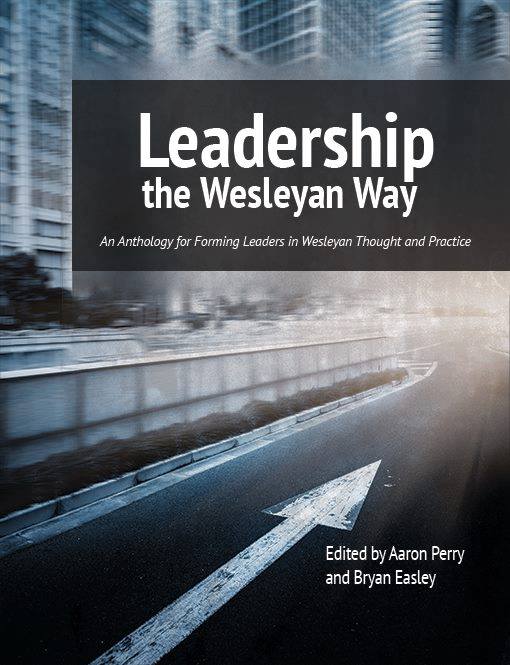
Leadership the Wesleyan Way releases July 1 from Emeth Press. Find out more about the book at http://leadershipbook.bryaneasley.com, including a list of contributors and table of contents. We hope to have purchase information and links available soon.