Articles

  • Complexity & Leadership

    A complex group can be understood as a web of interactions between group members, outside contextual dynamics, and the parameters of the group as its own system. For leadership research, this provides three vantage points of study: member/member interactions, group-as-system/context interactions, and member/context interactions. Complexity suggests that any individual part of a system (a person,…
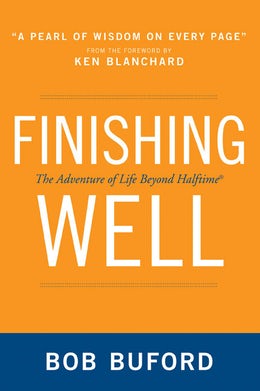
  • Finishing Well

    I have previously done some work in my graduate program on the topic of how leaders “finish well.” Finishing well describes how leaders prepare for and engage life after their transition into retirement. Bob Buford, in Finishing Well, calls this stage Life II and observes that finding significance and meaning in Life II is often difficult for leaders, especially…

  • Prospectors & Defenders

    Miles & Snow describe four basic archetypes – overarching categories – of how organizations tend to function. Defenders value stability and tradition. Their market focus is narrow and deep, surviving through price or product quality. Structure is formal with centralized control. They are avoiders of change. Prospectors are at the opposite end of the spectrum. They…

  • Leadership: No Such Thing?

    What is Leadership? I resonate with Richard Barker’s argument that leadership still isn’t really a construct. Leadership studies are all over the map and almost every scholar you read has a different definition, many of which are contradictory. It seems often that almost anything can be leadership to the point that everything is leadership, which…

  • Trinitarian Leadership

    The recent trends in organizational studies of spirituality, relationality, complexity, authenticity, and servanthood echo key themes in Christian theology, especially the doctrine of the Trinity. I’ve become convinced that looking at leadership through a distinctly Christian Trinitarian lens will provide a robust, holistic, and powerful construct for leadership theory and practice. While my own particular…

  • Faith & Christian Scholarship

    If we ‘unhook’ our Christian framework from the discussion of spirituality in the marketplace, we perpetuate the discouragement of “free intellectual inquiry” (Sirico, 2002, p.34), and, in so doing, offer nothing meaningful to academe. We become, in effect, theistic existentialists who say that although (for us) truth is rooted in God, it’s validity to the…

  • Leadership as Obedience rather than Service

    I recently wrote an article entitled “Kenosis and the Leadership of Jesus: A Sacred Texture Analysis of the Philippians Hymn.” Here is the conclusion to that article. In summary, Jesus’ leadership as seen through a sacred texture analysis of Philippians 2:5-11 reveals three major truths. First, the beginning posture of Christ as a servant is…

  • |

    Power-full Leadership

    Calvin Miller writes in The Empowered Leader, “the cross of Christ is the focus for all who commit themselves to leadership. The cross proves that anytime we take ultimate steps to obey God, human opinion can move swiftly against us…We best exonerate our leadership by reckoning ourselves dead to our ambition. Those who crucify themselves have…